
 India has transitioned into a defining era—the age of Bharat—where the pillars of Atmanirbhar Bharat (Self-Reliant India) have shifted from aspiration to economic reality. Driven by a robust GDP growth rate of 7.4%, India is currently outperforming its global peers and solidifying its position as a primary engine of world economic growth.
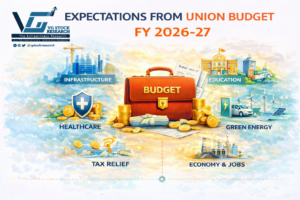
The upcoming Union Budget 2026-27 stands as the most critical driver of this trajectory. It serves as a strategic roadmap, detailing where public spending will be directed to unlock new engines of inclusive growth while providing a transparent view of the nation’s fiscal health.
Below is an analysis of the key reforms and sector-specific expectations poised to strengthen India’s economic foundation.
-
Direct Tax Reforms:
- Interest Deduction under Section 24(b): The cap on interest deductions for self-occupied properties may rise, easing burdens for individual taxpayers.
- Joint Taxation for Married Couples: A new joint filing option could simplify compliance and unlock added benefits.
- Foreign Tax Credit at TDS Stage: Claiming FTC during TDS deduction—rather than only at return filing—addresses a longstanding gap.
- ESOP Taxation for Relocated Employees: Clear rules are needed for perquisite taxation on vesting, especially for those partially in India during the period.
- Enhanced Depreciation for Manufacturing: Beyond initial-year benefits, extended depreciation in later years would counter higher wear-and-tear in this vital sector.
- AI and Robotics Tax Incentives: Building on 2025’s focus, fresh benefits for AI, robotics, and space tech would elevate India’s global edge.
- EV Car Perquisite Valuation: Update Section 17 and Rule 3 to fit electric vehicles, moving beyond outdated engine-capacity metrics.
- Capital Gains on Contingent Consideration: M&A deals often hinge on future performance; explicit tax rules for such gains are overdue.
- Section 80JJAA Relaxation: Amid tepid job growth, easing this employment-linked deduction would spur hiring.
- Further Decriminalization: Extending 2025’s TCS-related decriminalization to more provisions would streamline enforcement.
-
Indirect Tax Reforms:
- GST Simplification: Post-GST 2.0’s success in revenue and compliance, expect tweaks to Input Tax Credit for smoother cash flow and business ease.
- Customs Litigation Digitalization: Faster resolutions and digital tools would boost importer confidence and trade efficiency.
- Tariff Structure Alignment: Streamlined, globally synced tariffs would cut complexity for importers and exporters.
- Export Rule Liberalization: Incentives amid geopolitical flux could sharpen competitiveness and balance trade.
- Expanded Advance Rulings: Broader scope would slash litigation, costs, and delays in tricky customs cases.
-
Real Estate Boost:
- Lower stamp duties and an affordable housing threshold up to ₹75–90 lakh to ignite demand.
- Single-window approvals, stalled-project fixes, and ‘infrastructure status’ for cheaper, long-term funding.
-
Fostering Global Ties:
- Easing FDI hurdles, tech transfers, and collaborations to draw global firms.
- Optional presumptive tax for foreign players in tech consultancy, e-commerce, digital services, management, and software.
-
AI and Robotics Push:
- Production-linked incentives and infra support extended to AI, robotics, and deep-tech.
- Beefed-up digital/compute infrastructure for AI rollout.
- AI integration in healthcare, logistics, education, and public services.
-
Manufacturing and MSME Support:
- Subsidies on raw materials/machinery and export perks for global competitiveness.
- MSME priorities: Quicker credit access, robust guarantees for new/informal borrowers, and rural scheme delivery.
-
Climate Action and Green Energy:
- Scale solar manufacturing to cut imports; enhance grid storage for reliability.
- Advance green hydrogen and clean industrial fuels.
- Clean Mobility: EV charging beyond metros, local battery production/recycling, and public transport synergies.
-
Defense Allocation Surge:
- Bigger outlays for homegrown production and subsidies.
- Tie-ups with infra and advanced manufacturing; slash import reliance.
-
R&D Investment:
- Ramp up public funding for innovation hubs and applied research.
- Industry-academia-startup partnerships focused on commercializing outputs.
-
Healthcare Advances:
- Cut customs duties on key drugs, therapies, robotics, and radiotherapy gear.
- PLI infra boosts for more beds, rural facilities, and telemedicine.
- Pharma/device PLI 2.0, R&D incentives, and GST tweaks to curb imports.
|
Indicator |
FY 2024-25 (Revised) |
FY 2025-26 (Budgeted) |
FY 2026-27 (Expectations) |
|
Fiscal Deficit (% of GDP) |
4.80% |
4.40% |
4.0% – 4.3% |
|
Total Expenditure |
₹47.16 Lakh Cr |
₹50.65 Lakh Cr |
~₹54–55 Lakh Cr |
|
Capital Expenditure |
₹10.18 Lakh Cr |
₹11.21 Lakh Cr |
~₹12.5 Lakh Cr |
|
Nominal GDP Growth |
9.60% |
10.10% |
10.5% (Projected) |
*Note: The above data has been collected via media sources please check reliable sources before taking any action